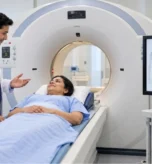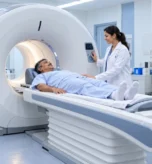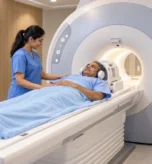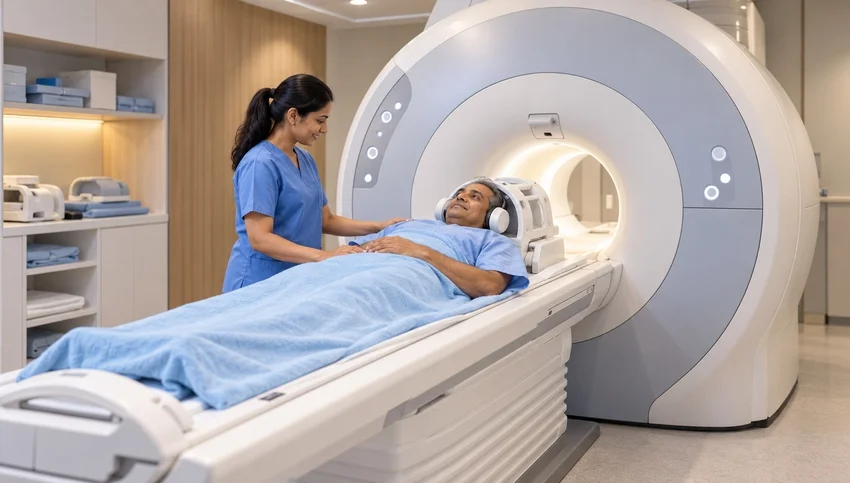
Discover what Whole-Body MRI can detect, how it works, its potential benefits and limitations, and whether it is appropriate for routine health screening.
What Is Whole-Body MRI?
Whole-Body MRI is an imaging examination that evaluates multiple regions of the body during a single MRI session. It uses a powerful magnetic field, radiofrequency signals and computer processing to create detailed images of internal structures.
Unlike X-rays and CT scans, MRI does not use ionizing radiation. Depending on the protocol, Whole-Body MRI may examine areas such as the bones, bone marrow, soft tissues, abdomen and pelvis.
However, the exact regions covered and the conditions that can be assessed depend on the examination protocol and the clinical question.
Whole-Body MRI: What Can It Detect?
Whole-Body MRI can help doctors evaluate certain abnormalities affecting multiple body regions. Its usefulness depends on the condition being investigated, the imaging sequences used and the patient’s medical history.
Potential applications include:
- Certain cancers: In selected patients with known cancer, Whole-Body MRI may help assess disease involving multiple regions of the body.
- Bone and bone marrow abnormalities: It can help evaluate selected conditions affecting the skeleton and bone marrow.
- Soft-tissue abnormalities: MRI can provide detailed information about many muscles and other soft tissues.
- Selected inherited conditions: It may be used for surveillance in certain people with specific inherited cancer-predisposition syndromes, when recommended by their specialist.
Whole-Body MRI does not detect every disease or every cancer. A targeted examination, laboratory test, biopsy or another imaging method may still be needed to investigate a particular finding.
Whole-Body MRI for Health Screening: Is It Necessary?
Many healthy people consider Whole-Body MRI because they want to check multiple areas of their body in one examination. Although this may sound reassuring, a comprehensive scan is not the same as a proven screening programme.
For people without symptoms or specific risk factors, evidence that routine Whole-Body MRI screening improves long-term health outcomes remains limited. Professional radiology guidance does not currently support recommending it universally for this group.
The appropriate approach is to discuss your age, family history, medical history and individual risk factors with your doctor before choosing a screening examination.
Can Whole-Body MRI Detect Every Cancer?
No. Whole-Body MRI cannot guarantee that a person is cancer-free.
Different cancers can require different diagnostic methods. Depending on the suspected condition, doctors may recommend mammography, cervical cancer screening, colon cancer screening, ultrasound, CT, PET-CT, endoscopy or laboratory tests.
Some abnormalities may be difficult to identify on a general whole-body protocol. Others may require a dedicated scan with more detailed images of a specific organ or body region.
Whole-Body MRI should therefore be viewed as one imaging tool for selected clinical situations—not a replacement for every recommended cancer-screening test.
Whole-Body MRI and Incidental Findings: What Do They Mean?
An incidental finding is an unexpected abnormality discovered while examining an area for another reason. Because Whole-Body MRI covers multiple body regions, it may reveal findings unrelated to the original clinical question.
Many incidental findings are harmless. However, some may require additional imaging, laboratory tests, specialist assessment or, occasionally, a biopsy to determine their significance.
These follow-up investigations can cause additional expense, uncertainty and anxiety. Some findings may also lead to further testing without ultimately revealing a serious disease.
This is why Whole-Body MRI results should be interpreted by an appropriately qualified radiologist in the context of the patient’s clinical history.
Does Whole-Body MRI Use Radiation?
No. MRI does not use ionizing radiation, which is used in X-ray and CT examinations.
This is an important characteristic of MRI, particularly when repeated imaging is clinically required. However, the absence of ionizing radiation does not mean every MRI examination is risk-free or necessary.
MRI uses a strong magnetic field, so patients must tell the imaging team about pacemakers, implants, metal fragments or other devices that could affect MRI safety. The team will determine whether the examination can be performed safely.
Some MRI examinations also require contrast material, depending on the clinical indication and protocol. Your doctor and imaging team can explain any relevant precautions.
How Long Does a Whole-Body MRI Take?
Whole-Body MRI generally takes longer than a routine MRI of a single body region. The total duration depends on the examination protocol, the areas being evaluated and whether additional sequences are required.
During the scan, patients need to remain as still as possible to help produce clear images. Movement can reduce image quality and may require some sequences to be repeated.
Before the appointment, ask the imaging centre about the expected duration, preparation instructions and any safety screening requirements.
Whole-Body MRI vs Targeted MRI: What Is the Difference?
The main difference is the purpose and coverage of the examination.
Whole-Body MRI surveys multiple body regions and may be useful in selected conditions requiring broader assessment.
Targeted MRI focuses on a specific region, such as the brain, spine, knee, pelvis or abdomen. It can use dedicated sequences to investigate a particular symptom or suspected condition in greater detail.
A targeted MRI may provide more relevant information when a doctor needs to answer a specific clinical question. The appropriate choice depends on the patient’s condition and the reason for imaging.
Who May Benefit from Whole-Body MRI?
Whole-Body MRI may be useful when a doctor identifies a specific clinical indication, such as selected cancer assessments, certain bone marrow disorders or surveillance for particular inherited conditions.
For a person with no symptoms and no known risk factors, a whole-body scan should not automatically be considered necessary simply because it examines a large area.
Before arranging an examination, discuss its potential benefits, limitations, possible incidental findings and any recommended alternatives with your treating doctor.
Whole-Body MRI at Super Scan: What Should Patients Know?
Super Scan is a diagnostic imaging provider in Surat offering MRI and other imaging services. If you are considering Whole-Body MRI, contact the centre to confirm whether this specific examination is available, which clinical indications it accepts and what preparation is required.
The right imaging examination should be selected according to the patient’s medical needs rather than the number of body regions scanned. A referring doctor and radiologist can help determine whether Whole-Body MRI or a targeted examination is more appropriate.
Frequently Asked Questions (FAQs)
1. Is Whole-Body MRI worth getting?
It depends on your medical history, risk factors and the reason for the examination. It may be useful in selected clinical situations, but routine screening for every healthy person has not been shown to improve long-term outcomes.
2. Can Whole-Body MRI detect cancer early?
It can identify some abnormalities that may be associated with cancer, but it does not detect every cancer and cannot guarantee early diagnosis. Recommended screening tests should still be followed according to your age, risk factors and medical advice.
3. Is Whole-Body MRI safe because it has no radiation?
MRI does not use ionizing radiation, but it has other safety considerations, particularly involving strong magnetic fields and certain implants or metal objects. The imaging team should screen patients before the examination.
4. Can Whole-Body MRI replace regular health check-ups?
No. It does not replace routine clinical assessments or established screening tests recommended for specific conditions. Your doctor can help you determine which tests are appropriate.
5. Can Whole-Body MRI find problems in healthy people?
It may reveal unexpected abnormalities, including findings that are harmless. Some findings may require additional investigations, so the possible benefits and limitations should be understood before proceeding.
6. Is Whole-Body MRI better than a targeted MRI?
Not necessarily. Whole-Body MRI examines multiple regions, whereas targeted MRI focuses on a specific area and can provide more detailed information for certain clinical questions. The choice depends on the medical indication.
7. Where can I enquire about MRI services in Surat?
You can contact Super Scan to enquire about MRI services and confirm whether Whole-Body MRI is available. Your doctor should help determine the most appropriate examination for your circumstances.
Also read,
- Diagnostic Imaging Services in Surat
- Colour Doppler
- Contrast Procedures
- 3D and 4D Sonography
- PET Scan
- Gamma Scan