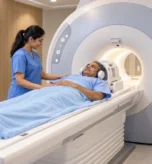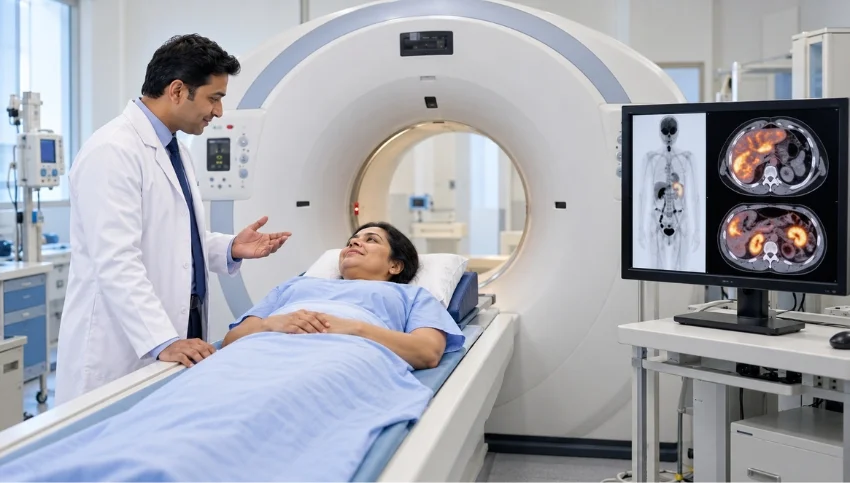
Understand how DOTA PET-CT helps locate neuroendocrine tumors, assess somatostatin receptor expression and support treatment planning, including PRRT eligibility.
If your doctor has recommended a DOTA PET-CT for neuroendocrine tumors, you may have questions about why this scan is needed, how it differs from a regular PET-CT and whether its results can help guide treatment. DOTA PET-CT is a specialized molecular imaging examination that helps doctors identify neuroendocrine tumor (NET) cells that express somatostatin receptors. It can help assess the location and extent of disease and, in selected patients, support evaluation for a targeted treatment called peptide receptor radionuclide therapy (PRRT).
At Super Scan, understanding the purpose of a specialized scan can help patients and families prepare for an informed discussion with their treating medical team.
What Are Neuroendocrine Tumors (NETs)?
Neuroendocrine tumors are a group of tumors that develop from neuroendocrine cells, which have characteristics of both nerve cells and hormone-producing cells. These tumors can occur in different parts of the body, including the pancreas, stomach, small intestine, lungs and other organs.
NETs do not all behave in the same way. Some grow slowly, while others may grow or spread more quickly. Their behaviour depends on factors such as the tumor’s location, type, grade and biological characteristics.
Doctors may use imaging, biopsy findings, laboratory tests and the patient’s medical history to understand the disease. A DOTA PET-CT scan can provide important molecular imaging information when somatostatin receptor imaging is appropriate.
What Is a DOTA PET-CT Scan?
A DOTA PET-CT is a specialized nuclear medicine scan that uses a radiotracer designed to bind to somatostatin receptors. These receptors are present in many neuroendocrine tumors.
Commonly used tracers include gallium-68 DOTATATE, DOTATOC and, where available, other receptor-targeting tracers. The specific tracer used depends on clinical requirements and local availability.
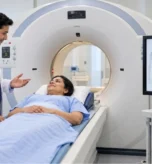
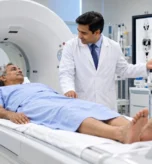
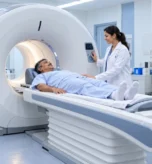
After the tracer is injected into a vein, it travels through the body and may bind to cells that express the relevant receptors. The PET scanner detects the tracer’s distribution, while the CT component provides anatomical information to help locate areas of uptake.
In simple terms, DOTA PET-CT helps doctors look for areas that show somatostatin receptor activity and assess them alongside the patient’s other clinical findings.
Why Is DOTA PET-CT Done for Neuroendocrine Tumors?
A doctor may recommend this scan for several reasons, depending on the patient’s diagnosis and clinical situation.
1. To Locate a Suspected or Known NET
DOTA PET-CT may help identify a primary neuroendocrine tumor or additional sites of disease when receptor-based imaging is clinically appropriate.
2. To Assess the Extent of Disease
The scan may help evaluate whether suspected disease involves lymph nodes, the liver, bones or other parts of the body. These findings can contribute to staging and treatment planning.
3. To Evaluate Disease During Follow-Up
In selected patients, somatostatin receptor PET-CT may be used to reassess disease when clinically indicated. The choice and timing of follow-up imaging depend on the tumor type, prior results and treating team’s plan.
4. To Help Assess Suitability for PRRT
One important role of receptor imaging is to assess whether a tumor demonstrates the target expression needed for consideration of certain receptor-directed treatments, including PRRT. The scan is one part of the assessment, not the sole factor determining treatment eligibility.
DOTA PET-CT vs FDG PET-CT: What Is the Difference?
Both scans combine PET imaging with CT, but they use different tracers to examine different biological features.
FDG PET-CT uses a glucose-related tracer to identify areas of increased glucose metabolism. It is useful in many cancers, including some neuroendocrine tumors, particularly when their biology is more metabolically active.
DOTA PET-CT uses a tracer that targets somatostatin receptors. It is particularly useful for many well-differentiated NETs that express these receptors.
The two scans are not interchangeable in every situation. Some patients may benefit from one type of scan, while others may need complementary imaging based on tumor grade, suspected behaviour, previous results and the clinical question. The treating specialist decides which examination is appropriate.
How Does DOTA PET-CT Work?
The examination involves a few main steps:
- Tracer injection: A small amount of the prescribed radioactive tracer is injected into a vein.
- Tracer distribution: The medical team allows time for the tracer to circulate and bind to target receptors.
- Image acquisition: The patient lies on the scanner table while PET and CT images are obtained.
- Image interpretation: A trained nuclear medicine physician evaluates the images in the context of the patient’s history, other investigations and reason for referral.
The injection and scan are generally well tolerated, although individual experiences vary. Follow the instructions provided by the imaging centre, as preparation and timing can differ according to the tracer and protocol.
What Can DOTA PET-CT Results Show?
The report may describe areas of tracer uptake, their locations and their relationship to findings on CT. Depending on the case, the scan may provide information about:
- The location of a suspected primary tumor.
- Possible involvement of lymph nodes or distant organs.
- The distribution of receptor-positive disease.
- Changes compared with earlier imaging, where comparison is available.
- Receptor expression that may be relevant when the team assesses PRRT eligibility.
Tracer uptake must be interpreted carefully. Uptake alone does not automatically prove cancer, and the absence of strong uptake does not exclude every neuroendocrine tumor. Normal physiological uptake and other clinical factors can affect interpretation.
The final assessment may incorporate pathology, other scans, laboratory findings and clinical history. Patients should discuss the meaning of their individual report with their treating specialist.
What Is PRRT and How Is It Related to DOTA PET-CT?
Peptide receptor radionuclide therapy (PRRT) is a targeted radiopharmaceutical treatment used for selected patients with neuroendocrine tumors that express suitable somatostatin receptors.
In receptor-targeted imaging, a diagnostic radiotracer helps doctors visualize areas expressing the target. In PRRT, a related targeting molecule is linked to a therapeutic radionuclide so that radiation can be delivered to receptor-expressing tumor cells.
A commonly used treatment is lutetium-177 DOTATATE (Lu-177 DOTATATE). Although the diagnostic scan and therapy use related targeting principles, they are different procedures and serve different purposes.
Does Everyone With a NET Need Lu-177 Therapy?
No. PRRT is not appropriate for every person with a neuroendocrine tumor. The decision depends on several factors, which may include:
- The tumor’s type, grade and extent.
- Somatostatin receptor expression on appropriate imaging.
- Previous and current treatments.
- Kidney function and bone-marrow health.
- The patient’s general health, symptoms and treatment goals.
The oncology and nuclear medicine teams assess the complete clinical picture before recommending treatment. A DOTA PET-CT result alone cannot guarantee eligibility or a particular treatment outcome.
What Is Theranostics in Cancer Care?
Theranostics combines diagnostic imaging and targeted treatment around a specific biological target. In neuroendocrine tumors, somatostatin receptors can help doctors visualize receptor-expressing disease and assess whether receptor-targeted treatment may be suitable.
This approach supports more individualized treatment planning. However, the benefits and risks differ from patient to patient, and treatment decisions should always be made by the appropriate medical team.
How Should You Prepare for a DOTA PET-CT Scan?
Preparation depends on the tracer, the centre’s protocol and the patient’s medical circumstances. Before your appointment:
- Share your diagnosis, medical history and current medication list.
- Bring relevant biopsy reports, previous PET-CT or CT scans and other investigations.
- Tell the team about any allergies, significant medical conditions or recent treatments.
- Inform the team if you are pregnant, may be pregnant or are breastfeeding.
- Follow the centre’s specific instructions about food, medicines, appointment timing and any other preparation.
Do not stop or change prescribed medicines unless your treating doctor or imaging team tells you to do so.
Is DOTA PET-CT Safe?
DOTA PET-CT uses a controlled amount of radioactive tracer and involves exposure to ionizing radiation from the PET examination and CT component. The medical team considers the expected clinical benefit and potential risks when recommending the scan.
The tracer’s radioactivity decreases over time, and the substance is eliminated from the body through normal biological processes to varying degrees, depending on the tracer. Your team can explain any precautions you should follow after the examination.
Pregnancy and breastfeeding require specific assessment and instructions. If either applies to you, inform the imaging team before the tracer is administered.
Frequently Asked Questions FAQs
1. Is DOTA PET-CT only used for neuroendocrine tumors?
It is particularly important in the evaluation of many neuroendocrine tumors that express somatostatin receptors. Its use depends on the clinical indication and the tracer available.
2. Is DOTA PET-CT the same as a regular PET-CT?
No. DOTA PET-CT uses a receptor-targeting tracer, while a common FDG PET-CT uses a glucose-related tracer. Each provides different biological information.
3. Can DOTA PET-CT detect whether a NET has spread?
It can help assess the distribution of receptor-positive disease, including possible involvement of lymph nodes and distant organs. Results need to be interpreted with other clinical information.
4. Does a positive DOTA PET-CT mean I need PRRT?
No. The scan may contribute to assessing suitability, but treatment decisions also depend on the tumor’s characteristics, previous treatments, organ function and overall clinical condition.
5. Is the DOTA PET-CT scan painful?
The scan itself is generally painless. You may feel brief discomfort from the injection, and you will need to remain still during image acquisition.
6. How can I book a DOTA PET-CT in Surat?
Contact Super Sahyog Nuclear Imaging at the Khatodara location to ask about the scan, referral requirements, preparation and appointment availability. Your treating doctor can help determine whether this examination is appropriate for you.
Conclusion
DOTA PET-CT for neuroendocrine tumors provides molecular imaging information about somatostatin receptor expression and can help doctors evaluate disease distribution and treatment options. For selected patients, these findings may also contribute to assessment for PRRT with Lu-177 DOTATATE.
The most appropriate imaging and treatment plan depends on each patient’s diagnosis and clinical circumstances. Discuss your scan recommendation and report with your treating specialist, and follow the imaging centre’s instructions before your appointment.
Also read,
- Diagnostic Imaging Services in Surat
- Colour Doppler
- Contrast Procedures
- 3D and 4D Sonography
- PET Scan
- Gamma Scan