Understand how CT coronary angiography evaluates the heart’s arteries, what to expect during the scan, how to prepare and which safety factors matter.
Chest discomfort, breathlessness or an abnormal cardiac test may lead your doctor to investigate the coronary arteries—the blood vessels that supply oxygen-rich blood to the heart muscle.
One examination that may be recommended in selected patients is CT Coronary Angiography (CTCA). This specialized CT scan uses intravenous contrast material to produce detailed images of the coronary arteries and help doctors assess plaque and narrowing.
For patients searching for CT Coronary Angiography in Surat, understanding the procedure, its benefits, preparation requirements and safety considerations can help make the diagnostic process easier to understand.
What Is CT Coronary Angiography?
CT Coronary Angiography, also called coronary CT angiography or CCTA, is a non-invasive imaging examination used to visualize the coronary arteries.
These arteries supply blood to the heart muscle. Over time, plaque made up of cholesterol, fats and other substances may develop in the artery walls. This plaque can sometimes narrow the arteries and affect blood flow.
During a CTCA scan, an iodine-based contrast material is injected through a vein in the arm. A CT scanner then captures detailed images of the heart and coronary arteries. The images help radiologists assess the presence, location and extent of coronary plaque or narrowing.
The examination may help doctors evaluate suspected coronary artery disease in appropriately selected patients. Whether it is suitable depends on the individual’s symptoms, medical history and clinical assessment.
How Is CT Coronary Angiography Different From Conventional Angiography?
Although both procedures examine the coronary arteries, they use different techniques.
CT Coronary Angiography
- Uses a CT scanner and intravenous contrast.
- Does not require a catheter to be advanced through an artery to the heart.
- Produces detailed images of the coronary arteries.
- Is primarily used for diagnostic assessment.
- May be performed in an appropriate outpatient imaging setting.
Conventional Coronary Angiography
- Uses a catheter inserted into an artery, commonly at the wrist or groin.
- The catheter is guided toward the heart.
- Contrast is injected to visualize the coronary arteries using X-ray imaging.
- Can form part of a treatment procedure if angioplasty or stenting is required.
CTCA does not replace conventional angiography in every situation. If the CT examination identifies significant disease or if a treatment procedure is needed, a cardiologist may recommend invasive coronary angiography.
Who May Benefit From a CT Coronary Angiography Scan?
A doctor may recommend CTCA for selected patients when a detailed assessment of the coronary arteries is needed.
Possible reasons include:
- Chest discomfort requiring evaluation for coronary artery disease.
- Breathlessness when a cardiac cause is being investigated.
- Symptoms that need further assessment after initial cardiac tests.
- Inconclusive findings from selected previous investigations.
- Assessment of suspected coronary artery narrowing.
- Evaluation of coronary artery anatomy in selected clinical situations.
The test is not necessary for everyone with chest discomfort or cardiovascular risk factors. A doctor determines whether CTCA is appropriate after considering symptoms, risk factors, previous results and other relevant medical information.
Important: Severe, new or persistent chest pain, especially with breathlessness, sweating, faintness or pain spreading to the arm or jaw, may indicate a medical emergency. Seek emergency medical care rather than waiting for a scheduled scan.
What Happens During a CTCA Scan?
The process generally includes preparation, monitoring, image acquisition and post-scan instructions.
1. Initial Assessment
The radiology team reviews the doctor’s referral, medical history, medications and any previous contrast reactions. Heart rate and other relevant observations may be checked.
2. Heart Rate Preparation
Clear coronary images often require a suitably controlled heart rate. Some patients may be given medication to lower the heart rate temporarily, if clinically appropriate.
3. Intravenous Line
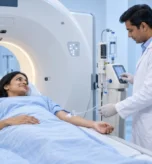
A small intravenous line is placed in a vein in the arm so that contrast material can be administered.
4. Image Acquisition
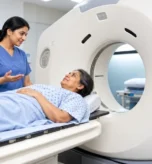
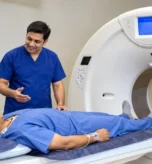
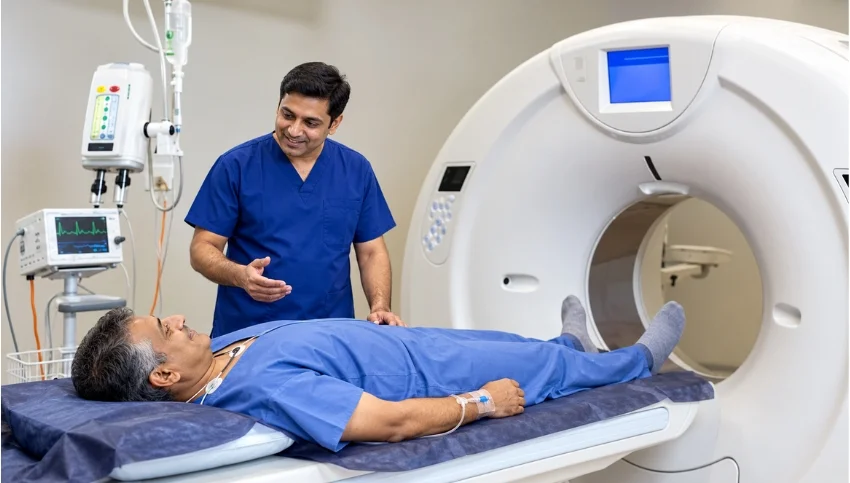
You lie on the CT table while images of the heart are acquired. The technologist may ask you to hold your breath briefly to reduce movement and improve image quality.
5. Image Review and Reporting
The images are reconstructed and reviewed by the radiologist. The findings are interpreted alongside the clinical information and provided to the referring doctor.
Although the image acquisition itself is usually brief, the complete appointment takes longer because preparation, monitoring and post-scan checks may be required.
How Should You Prepare for CT Coronary Angiography?
Preparation instructions can vary according to the imaging centre’s protocol and your medical circumstances.
Before the appointment:
- Follow the centre’s instructions about fasting.
- You may be asked to avoid caffeine for a specified period because it can affect heart rate.
- Tell the team about all medicines and supplements you take.
- Inform the team about kidney disease or previous kidney problems.
- Report any previous reaction to iodinated contrast material.
- Tell the team about diabetes, thyroid conditions or other relevant medical history.
- Inform the team if you are pregnant or may be pregnant.
- Bring your doctor’s referral and relevant previous cardiac investigations.
Do not stop prescribed medication or change its dose without instructions from your treating doctor. Ask the imaging team whether any medication needs special consideration before the scan.
Is the Contrast Injection Safe?
CT Coronary Angiography generally uses an iodine-based intravenous contrast material to make the coronary arteries easier to visualize.
Most patients tolerate the contrast well, but reactions can occur. Some people experience a temporary warm sensation or metallic taste during the injection.
Before the examination, tell your doctor or radiology team if you have:
- Had a previous reaction to iodinated contrast.
- Kidney disease or reduced kidney function.
- Significant allergies or a history of severe allergic reactions.
- Thyroid disease.
- Other medical conditions that may affect preparation or contrast use.
Kidney-function testing may be required for selected patients, particularly when medical history suggests an increased risk. The decision is made according to the patient’s circumstances and the centre’s protocol.
If you experience pain, swelling or an unusual sensation around the IV site during injection, tell the radiology team immediately.
What Is a Coronary Calcium Score? Is It the Same as CTCA?
No. A coronary calcium score and CT Coronary Angiography are different CT examinations.
Coronary Calcium Score
A coronary calcium score is usually performed without intravenous contrast. It measures calcified plaque in the coronary arteries and may help assess cardiovascular risk in appropriately selected people.
CT Coronary Angiography
CTCA uses intravenous contrast to show the coronary artery lumen and assess plaque, including calcified and non-calcified plaque, as well as areas of narrowing.
The two examinations answer different clinical questions. A calcium score does not provide the same information as a contrast-enhanced coronary CT angiogram.
Your doctor can advise which test, if either, is appropriate for your situation.
Does CT Coronary Angiography Involve Radiation?
Yes. CTCA uses X-rays, so it involves exposure to ionizing radiation.
The radiation dose varies according to factors such as body size, heart rate, scanner technology and scanning protocol. Modern CT systems use techniques designed to reduce exposure while maintaining images suitable for diagnosis.
The examination should be performed when medically justified, with the scan protocol tailored to the patient. If you are pregnant or may be pregnant, tell your doctor and the radiology team before the examination.
What Can CT Coronary Angiography Show?
Depending on image quality and the clinical circumstances, CTCA may help assess:
- Coronary artery plaque.
- The location and extent of coronary artery narrowing.
- The anatomy of the coronary arteries.
- Selected congenital variations in coronary artery anatomy.
- Changes that may need further evaluation by a cardiologist.
CTCA does not provide every type of information about heart function, and it cannot answer every cardiac diagnostic question. Results must be interpreted alongside symptoms, examination findings and other investigations.
What Happens After the CTCA Scan?
After the scan, the radiology team will provide instructions based on your individual circumstances.
In many cases, patients can return to normal activities after the appropriate post-scan checks. You may be advised to drink fluids if this is suitable for your medical condition and the team’s instructions.
The radiologist’s report should be discussed with the referring doctor or cardiologist. Depending on the findings, the doctor may recommend routine follow-up, medication, additional tests or further assessment.
A CTCA result should not be interpreted in isolation or used to change prescribed treatment without medical advice.
CT Coronary Angiography in Surat at Super Scan
Super Scan is a diagnostic imaging and radiology provider serving patients in Surat and South Gujarat. Its imaging services include advanced CT technology, MRI, ultrasound, mammography, digital X-ray and other diagnostic examinations.
If your physician or cardiologist has recommended CT Coronary Angiography in Surat, contact Super Scan to confirm availability, appointment requirements, preparation instructions and whether any recent laboratory reports are needed.
The radiology team can explain the preparation process and the information you should bring before your examination.
Frequently Asked Questions
1. What is CT Coronary Angiography?
CT Coronary Angiography is a CT examination that uses intravenous contrast to produce detailed images of the coronary arteries and assess plaque or narrowing.
2. Is CTCA a non-invasive test?
Yes. CTCA does not require an arterial catheter to be advanced to the heart. It does involve an intravenous line for contrast administration.
3. Is CTCA the same as a regular CT scan?
No. CTCA is a specialized cardiac CT examination designed to image the coronary arteries. It requires specific preparation and scanning protocols.
4. Does CT Coronary Angiography detect heart artery blockages?
CTCA can help identify coronary plaque and narrowing. The accuracy and usefulness of the examination depend on factors including image quality and the patient’s clinical circumstances. Results should be interpreted by a qualified radiologist and discussed with the treating doctor.
5. Is CTCA better than conventional angiography?
The tests serve different purposes. CTCA is non-invasive and can be useful for diagnostic assessment in selected patients. Conventional angiography may be required when invasive assessment or treatment, such as angioplasty or stenting, is needed.
6. Is a coronary calcium score the same as CTCA?
No. A calcium score measures calcified plaque without intravenous contrast, while CTCA uses contrast to visualize the coronary arteries and assess the vessel lumen and plaque.
7. Do I need a kidney-function test before CTCA?
Not every patient needs the same testing. Your doctor or radiology team will decide whether kidney-function assessment is needed based on your medical history and relevant risk factors.
8. Can I eat or drink before the scan?
You may receive specific fasting and caffeine-avoidance instructions. Follow the instructions provided by the imaging centre rather than relying on a general online schedule.
9. How long does a CTCA appointment take?
The image acquisition is generally brief, but preparation and monitoring mean the complete appointment takes longer. Ask the imaging centre for its current appointment guidance.
10. Where can I get CT Coronary Angiography in Surat?
Patients can contact Super Scan to confirm service availability, appointment details, preparation instructions and the appropriate centre for their examination.