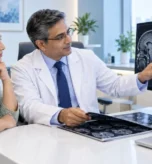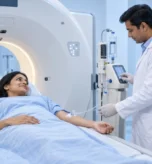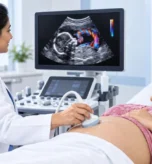
Get Greater Clarity From an Additional Expert Review of Your Diagnostic Imaging and Radiology Reports
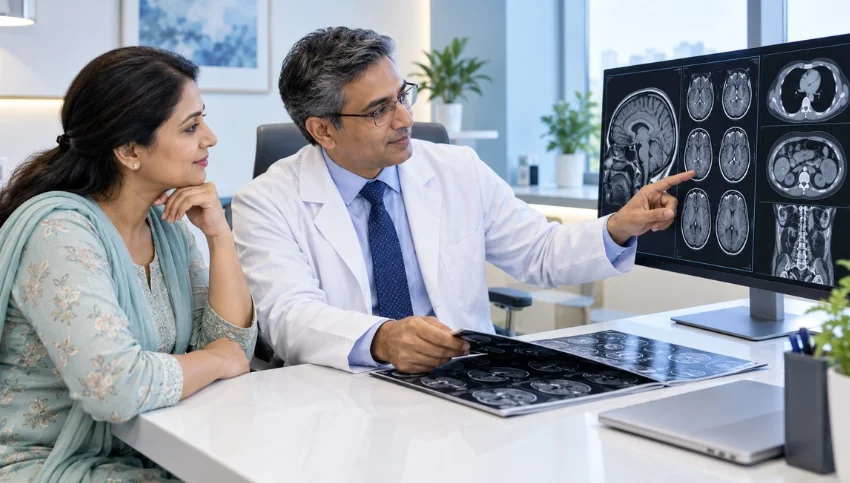
A Second Opinion can provide an additional expert review when you want greater clarity about an existing diagnostic imaging report or medical scan. Radiology second opinions may involve reviewing previous MRI, CT, X-ray, ultrasound, mammography or PET-CT images together with the available report and relevant clinical information. At Super Scan, Second Opinion in Surat is focused on expert radiology review to help patients and referring doctors better understand imaging findings and consider appropriate next steps.
When you receive a medical imaging report, understanding what the findings mean and how they relate to your symptoms can sometimes be difficult. In certain situations, your doctor may recommend additional evaluation, or you may simply want another expert perspective before making an important healthcare decision.
A Second Opinion involves an additional professional review of available medical information. In radiology, this can include reviewing diagnostic images, the original radiology report, previous examinations and relevant clinical history.
A second review does not necessarily mean that the first report was incorrect. It can instead provide another interpretation, help clarify an uncertain finding, or provide additional context for the treating doctor and patient.
For people searching for a Second Opinion in Surat, Super Scan provides expert radiology report review for selected imaging examinations including MRI, CT, X-ray, mammography and PET-CT.
What Is a Second Opinion in Radiology?
A radiology second opinion is an independent review of an existing diagnostic imaging examination by another qualified radiologist.
The reviewing radiologist may assess:
- Existing medical images
- Original radiology reports
- Clinical history
- Previous imaging studies
- Relevant laboratory or medical information when available
- The specific diagnostic question raised by the treating doctor
The purpose is to provide an additional professional interpretation based on the information available.
A radiology report is normally prepared for the healthcare professional who ordered the examination, and its findings should be interpreted together with the patient’s symptoms, medical history and other clinical information.
Why Might Someone Need a Radiology Second Opinion?
There are several situations in which an additional review may be considered.
A doctor or patient may seek a second opinion when:
- The imaging findings are unclear
- The report contains an uncertain or unexpected finding
- There is a significant medical decision to be made
- The imaging result may influence treatment planning
- A complex condition requires specialist imaging expertise
- Previous and current scans need comparison
- The patient wants another expert interpretation
- The treating doctor wants additional radiological clarification
A second opinion should be considered as part of the overall medical decision-making process rather than as a replacement for consultation with the treating doctor.
Which Scans Can Be Reviewed for a Second Opinion?
The type of examination available for review depends on the imaging centre and radiologist’s expertise.
Super Scan’s Second Opinion service states that its radiologists can review available:
- MRI
- CT Scan
- X-Ray
- Mammography
- PET-CT
The availability of review may depend on the quality and completeness of the images, reports and clinical information provided.
What Is Included in a Radiology Second Opinion?
A radiology second opinion generally involves reviewing the available imaging information and preparing an additional expert interpretation.
Depending on the examination, the review may consider:
Existing Imaging
The radiologist reviews the available scan images to assess the findings visible on the examination.
Original Report
The existing radiology report can provide important information about the original interpretation and the clinical question.
Previous Imaging
Earlier examinations can be especially useful when assessing whether a finding has changed over time.
Clinical Information
Symptoms, relevant medical history and the reason for the examination can help the radiologist interpret findings in the appropriate clinical context.
RadiologyInfo notes that previous imaging can be helpful because comparing earlier and current examinations may show whether a finding is unchanged or has developed over time.
Why Are Previous Scan Images Important?
Providing only the written report may not always be sufficient for a complete imaging second opinion.
The radiologist may need to see the actual images to evaluate the findings independently.
Previous scans can also help with comparison. For example, an area identified on a current scan may be easier to interpret when an earlier examination is available.
Previous imaging can help the radiologist determine whether an abnormality appears:
- New
- Stable
- Changed in appearance
- Changed in size
- Better characterized on a newer examination
RadiologyInfo specifically recommends obtaining and sharing previous medical images when seeing another healthcare provider, including when seeking a second opinion.
What Documents Should You Bring for a Second Opinion?
For a Second Opinion in Surat, patients should keep all relevant medical information together before submitting their examination for review.
Super Scan specifically instructs patients to bring old X-rays, sonography, CT scans and MRI images along with the clinician’s prescription. It also requests available DVD/CD copies of CT and MRI images, and states that the reviewed report is provided at least after 24 hours.
Useful documents may include:
- Previous MRI images
- Previous CT scan images
- X-ray films or digital images
- Sonography/ultrasound reports and images
- PET-CT images and report
- Mammography images and report
- Original radiology report
- Doctor’s prescription
- Relevant clinical records
- Previous comparison studies
- Other information specifically requested by the radiology centre
How Does the Second Opinion Process Work?
The process generally involves several steps.
Step 1: Collect Your Previous Records
Collect the original scan images, reports and relevant medical documents.
Step 2: Submit the Examination for Review
Provide the available imaging data and supporting documents according to the centre’s submission requirements.
Step 3: Radiologist Reviews the Images
The radiologist evaluates the examination and considers the clinical information and previous imaging when available.
Step 4: Additional Interpretation Is Prepared
The reviewing radiologist provides an additional professional interpretation based on the available information.
Step 5: Discuss the Findings With Your Doctor
The second opinion should be discussed with your treating doctor, who can relate the imaging findings to your symptoms, examination and overall medical condition.
Does a Second Opinion Mean the First Report Was Wrong?
Not necessarily.
Different radiologists may occasionally describe or interpret complex findings differently. A second opinion may confirm the original interpretation, provide additional clarification or identify an area that deserves further discussion.
The objective should be greater diagnostic clarity, not automatically proving that one report is right or wrong.
Radiology reports are interpreted in the context of the clinical question and patient history, and the treating doctor helps determine what the findings mean for the patient’s care.
Can Previous and New Scans Be Compared?
Yes, when appropriate previous examinations are available.
Comparison with earlier images is an important part of many radiology examinations. It can help identify whether a finding has remained stable or changed over time.
Patients should therefore retain copies of their previous imaging studies whenever possible.
Keeping an organized record of imaging examinations can also reduce unnecessary repetition of previously performed tests when the existing images are adequate for the clinical purpose.
When Can a Second Opinion Be Particularly Useful?
A second radiology review may be considered when imaging findings have an important role in a medical decision.
Examples may include:
- Complex MRI findings
- CT findings requiring clarification
- Follow-up of a previously identified abnormality
- Cancer-related imaging
- Pre-treatment imaging review
- Post-treatment comparison
- Unexpected imaging findings
- Uncertain or inconclusive reports
- Need for comparison with older examinations
The decision to seek a second opinion should be discussed with the treating doctor when appropriate.
Second Opinion for MRI Reports
MRI examinations can contain detailed information about soft tissues, joints, the brain, spine and other body structures.
A second review of an MRI may be useful when there is a question about:
- Brain imaging
- Spine imaging
- Joint or musculoskeletal findings
- Abdominal or pelvic imaging
- Tumour or lesion characterization
- Follow-up examinations
The reviewing radiologist needs access to the appropriate MRI images and relevant clinical information to provide a meaningful additional interpretation.
Second Opinion for CT Scan Reports
CT examinations provide detailed cross-sectional images of many areas of the body.
A second CT review may be considered when findings involve:
- Chest
- Abdomen
- Pelvis
- Head
- Spine
- Bone
- Blood vessels
- Follow-up examinations
Previous CT examinations can be especially useful when comparison over time is clinically relevant.
Second Opinion for X-Ray Reports
X-rays are widely used for evaluating bones, chest conditions and other selected areas.
An additional review may be considered when an X-ray finding is uncertain or when the result needs to be considered alongside symptoms and previous imaging.
Patients should bring the actual images whenever available rather than relying only on a written report.
Second Opinion for Mammography
Mammography is specialized breast imaging. When seeking an additional review, previous mammograms can be particularly valuable because comparison with earlier examinations may help determine whether a finding is new or unchanged.
Patients should provide previous mammography images and reports whenever available.
Second Opinion for PET-CT
PET-CT combines metabolic information from PET with anatomical information from CT.
A second review may be considered in selected situations involving cancer diagnosis, staging, treatment response or follow-up.
For PET-CT review, the available images, original report and relevant clinical and treatment history can be important to the radiologist’s interpretation.
What Is the Difference Between a Second Opinion and a New Scan?
A Second Opinion generally involves reviewing an existing examination.
A new scan means performing another imaging examination.
A new scan may not always be necessary simply because a patient wants additional clarity. If the existing images are technically adequate and contain the information needed for review, another qualified radiologist may be able to provide an additional interpretation using the existing examination.
However, if the existing examination does not adequately answer the clinical question, the treating doctor or radiologist may recommend additional imaging.
The appropriate choice depends on the individual clinical situation.
Does a Second Opinion Always Change the Diagnosis?
No.
A second opinion may:
- Confirm the original interpretation
- Add clarification
- Provide additional observations
- Suggest that further evaluation may be appropriate
- In some cases, lead to a different interpretation
The outcome depends on the examination and information available.
Patients should not assume that a second opinion will automatically produce a different diagnosis.
Why Is Clinical History Important?
Medical imaging should not be interpreted in isolation.
The radiologist needs to understand why the examination was performed and may need relevant information about symptoms, previous diagnoses, treatment and earlier imaging.
Clinical history helps the radiologist focus the interpretation on the diagnostic question.
RadiologyInfo explains that the clinical history supplied when an examination is ordered helps the radiologist interpret the study in relation to the patient’s symptoms and medical history.
Why Choose Super Scan for Second Opinion in Surat?
Super Scan provides a dedicated Second Opinion in Surat service for reviewing selected diagnostic imaging examinations.
According to Super Scan’s current service page, experienced radiologists review MRI, CT, X-ray, mammography and PET-CT studies and provide an additional expert opinion based on available imaging and reports. The centre also asks patients to provide previous imaging, clinician prescriptions and available CT/MRI image media for review.
Super Scan’s broader imaging network includes MRI, CT, ultrasound, mammography, digital X-ray, PET-CT, nuclear imaging, interventional radiology and other diagnostic services.
How to Prepare for Your Second Opinion
Before visiting or submitting your case, organize your medical records carefully.
Keep Your Imaging Together
Collect your MRI, CT, X-ray, ultrasound, mammography or PET-CT images.
Bring Original Reports
Provide the original radiology reports whenever available.
Keep Previous Studies
Older scans can be important for comparison.
Provide the Doctor’s Prescription
The referring doctor’s prescription or clinical information can help explain the reason for the examination.
Mention Relevant Medical History
Provide important information about previous diagnoses, surgeries, treatments and other relevant medical conditions.
Good documentation can make the review process more useful and efficient.
Frequently Asked Questions
1. What is a radiology second opinion?
A radiology second opinion is an additional expert review of existing medical images and related reports by another qualified radiologist.
2. Can I get a Second Opinion in Surat for an MRI?
Yes. Super Scan’s current Second Opinion service lists MRI among the examinations that can be reviewed.
3. Can CT scans be reviewed for a second opinion?
Yes. CT is among the imaging examinations listed by Super Scan for its Second Opinion service.
4. Do I need to bring my old scan images?
Yes. Previous images can be very useful for comparison, and Super Scan specifically instructs patients to bring available previous imaging and relevant medical documents.
5. Is the original radiology report required?
It is strongly recommended to provide the original report because it gives the reviewing radiologist information about the previous interpretation and examination details.
6. Can I get a second opinion without repeating the scan?
In many cases, an existing examination can be reviewed if the available images are technically adequate and accessible. Whether additional imaging is necessary depends on the clinical question and the quality of the existing study.
7. Will a second opinion always give a different result?
No. It may confirm the original interpretation, clarify it or provide additional observations.
8. How long does a Super Scan second opinion take?
Super Scan’s current Second Opinion page states that the reviewed report will be available at least after 24 hours. Actual timing can depend on the examination and review requirements.
9. Should I discuss the second opinion with my doctor?
Yes. The treating doctor can interpret the radiology findings together with symptoms, examination findings, medical history and other investigations.